Tatuus - Korus Group

Kimi Antonelli: The Journey to the Formula 1 World Championship


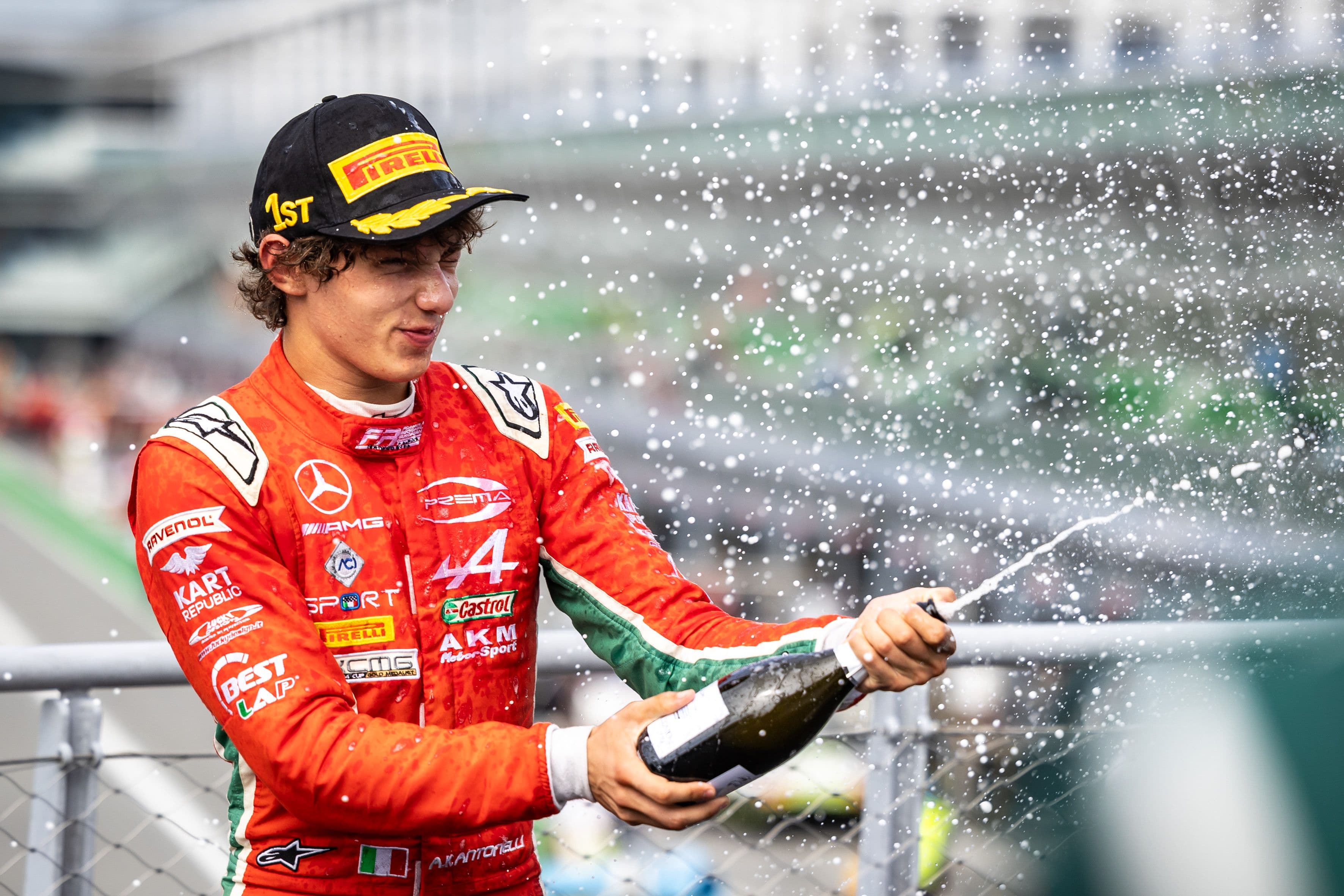
From his early days in karting to his Formula 4 and Formula Regional titles, Kimi Antonelli's journey also highlights the contribution of Tatuus, ATM and all the Korus companies that have supported his sporting development.


In motorsport, great careers begin long before reaching the Formula 1 spotlight and the fireworks of World Championship celebrations. Kimi Antonelli's story, as is so often the case, starts in karting, with titles and victories that continue into single-seater racing, always alongside the brands that are now part of Korus Group. BirelART, Kart Republic, IAME, LeCont, Tatuus, Autotecnica Motori and Breda Racing: each has played a role in this remarkable story of Italian motorsport, culminating in a World Championship title and ready to unfold through many more exciting chapters in the years ahead.


THE KARTING ERA


Kimi Antonelli's karting story began in 2015, when, at just eight years old, he made his debut in the Easykart 60 category and immediately claimed the Trofeo Easykart Italia and the Easykart International Grand Final. It was through the championship organised by Birel that his journey began, eventually leading him, following his first contact with Mercedes, to join the Kart Republic family and quickly establish himself among the most promising young talents in international karting. After his first successes, he dominated the OK-Junior category in 2019, claiming four WSK titles, the Italian Championship and second place in the FIA Karting European Championship.


Moving up to the OK category in 2020 marked another important milestone. Driving a KR kart powered by an IAME engine, Antonelli won the FIA European Championship, the WSK Euro Series and his second Italian title. He confirmed that success in 2021, winning the OK European Championship once again to become back-to-back champion, with three victories in the four rounds on the calendar. An impressive karting chapter, filled with success, came to a close.


THE MOVE ON TO TATUUS SINGLE-SEATERS


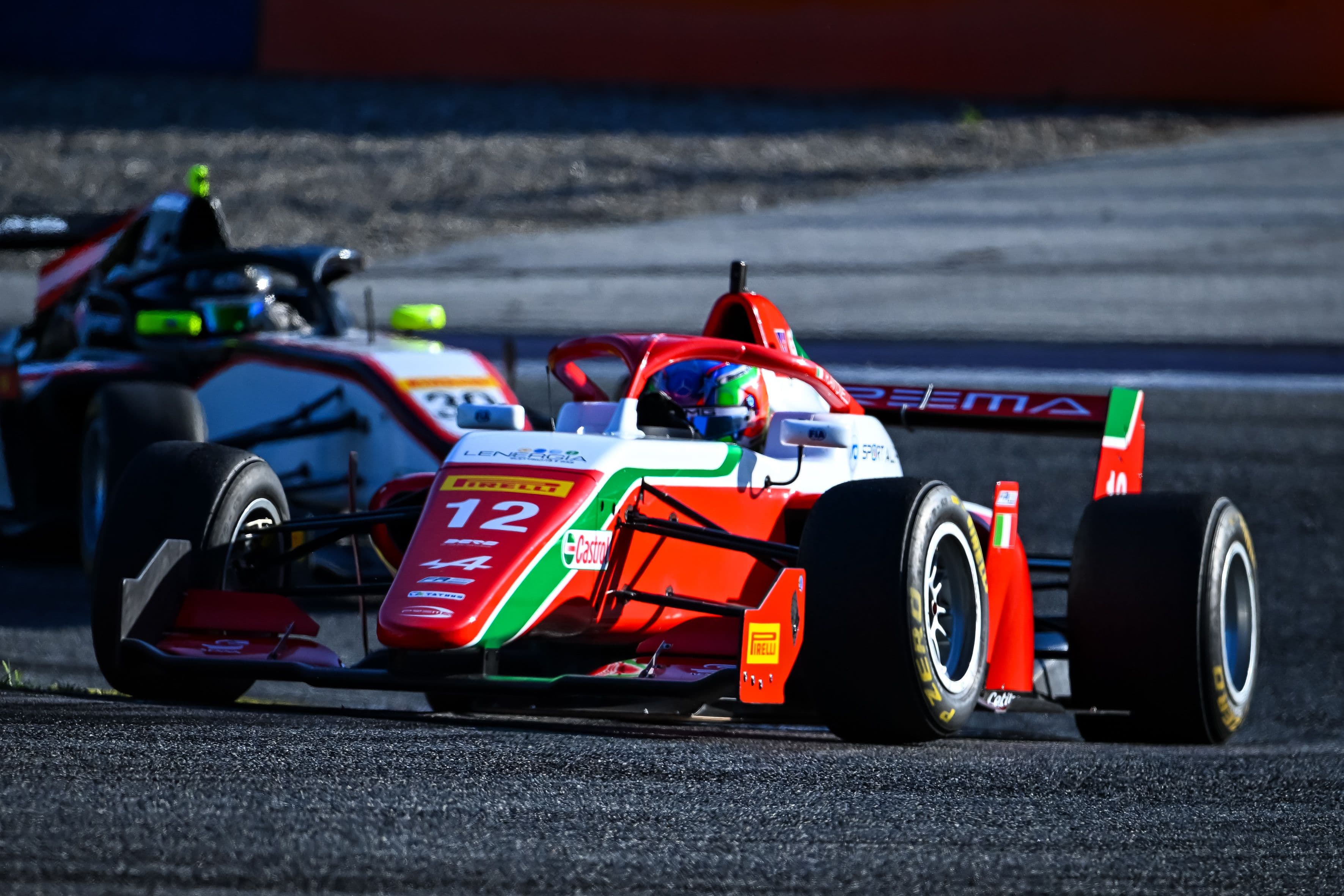
2021 marked Kimi Antonelli's transition from karting to single-seater racing. Just a few days after turning 15, he made his debut in the Italian Formula 4 Championship with PREMA Racing, competing in the final three rounds of the season at the wheel of the Tatuus T-014, powered by the ATM-Abarth 1.4-litre turbo engine producing 174 hp. It took just a handful of races for him to show his potential: at Monza, he finished on the podium in all three races of the weekend and ended his first single-seater campaign with four Rookie class victories. A debut already full of promising signs ahead of the following season, just like his performance at the Federal Supercourse, where he was named Best Driver on 10 November of the same year. In December, he also secured a podium finish at the Formula 4 Middle East Trophy Round in Abu Dhabi, the very first race for the new T-421.


In 2022, he took on his first full Formula 4 season, once again at the wheel of the T-421. It was a year packed with success from the very beginning in the United Arab Emirates, where Antonelli won the first two races at Yas Marina and secured three more podium finishes across the two rounds he contested in Abu Dhabi and Dubai. However, it was in the Italian and ADAC championships that he put together a truly outstanding season. In Italy, he dominated with 13 wins from 20 races, claiming the overall title. His achievement was backed by impressive statistics: 14 pole positions and 14 fastest laps, along with two second-place finishes, bringing his total podium count to 15. The title was secured at Mugello, where Antonelli completed a clean sweep of all three races in the final weekend, having already taken both pole positions in qualifying. The story was much the same in Germany: nine victories and seven pole positions, with the ADAC title clinched at the Nürburgring with one race to spare, despite having competed in one fewer round than his main rivals. With 22 victories across the two championships, Antonelli wrapped up his first full year in single-seaters with two titles and one of the most dominant seasons in Formula 4 history.


His 2022 campaign also brought another major international achievement at the FIA Motorsport Games, where he represented Italy in the Formula 4 competition and won the gold medal at the Le Castellet circuit.


THE FORMULA REGIONAL SEASON


In 2023, Kimi Antonelli took another step forward by moving up to Formula Regional. His first challenge of the season once again came in the Middle East Championship, where he competed with Mumbai Falcons Racing at the wheel of the Tatuus T-318, powered by the ATM-Alfa Romeo 1750 engine. He immediately showed that he could fight at the front in this new category, securing three victories, three pole positions and five podiums to build a decisive lead over his rivals. He clinched the title at Yas Marina with one race to spare, in a championship contested as a rookie and marking his third consecutive single-seater title.


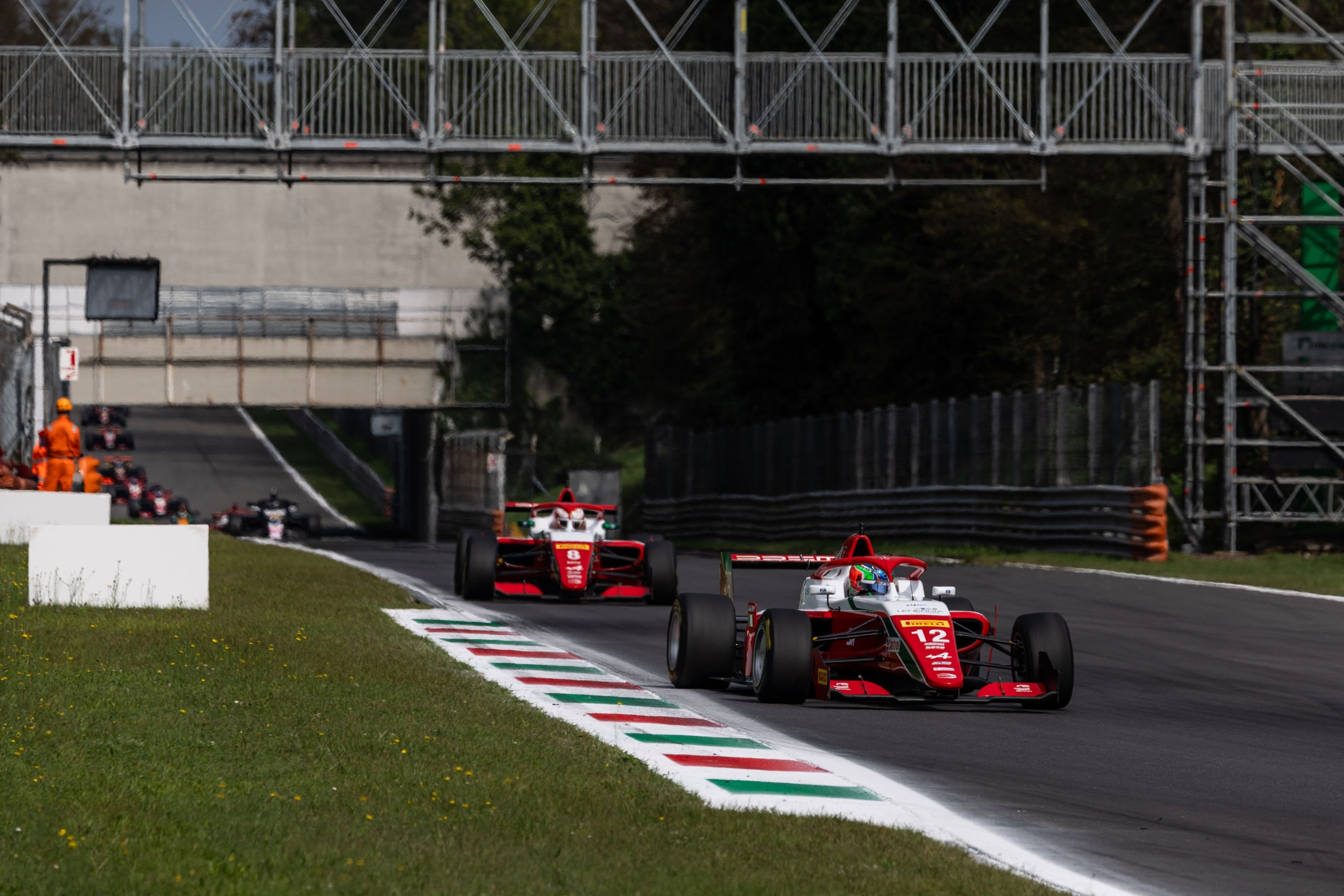
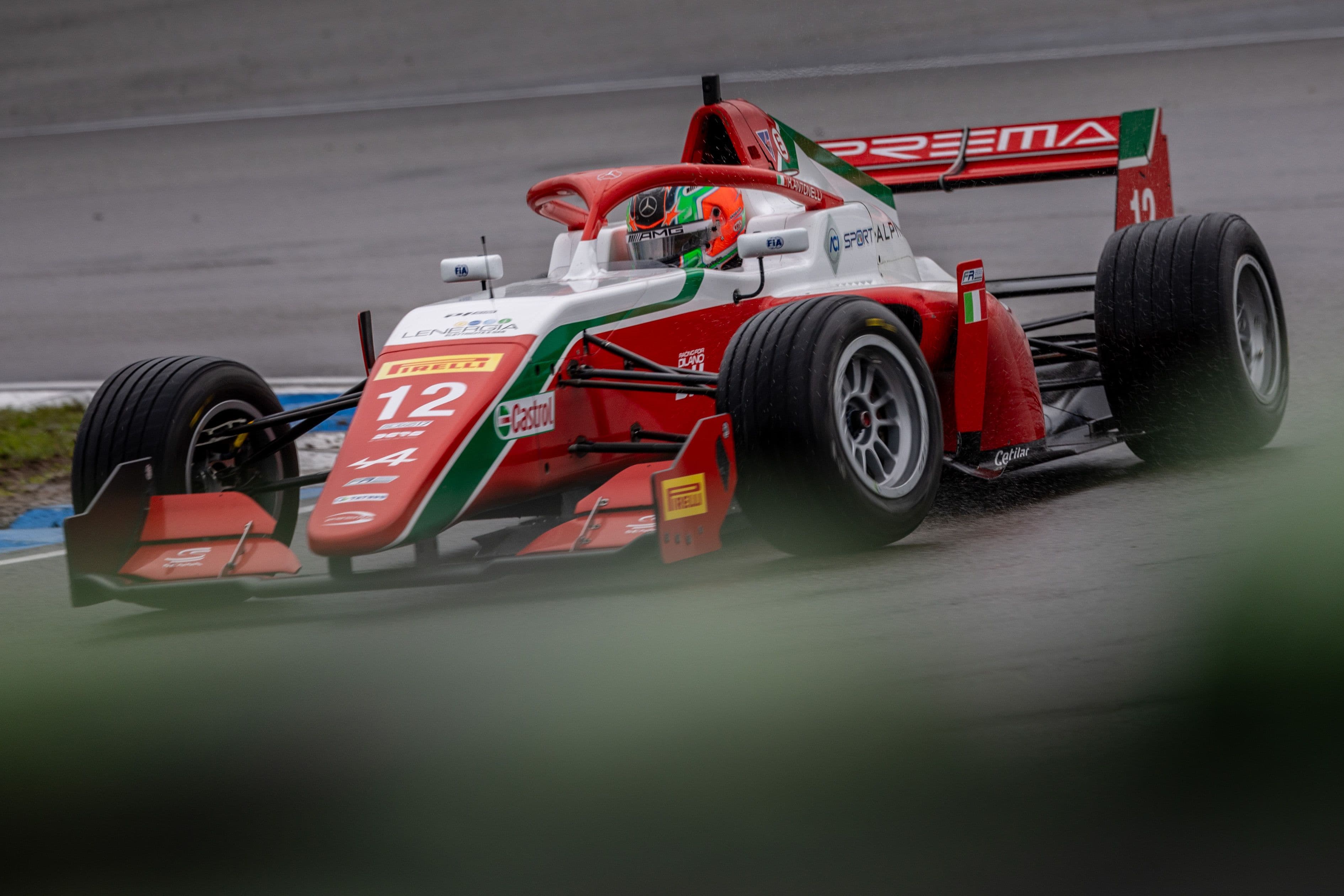
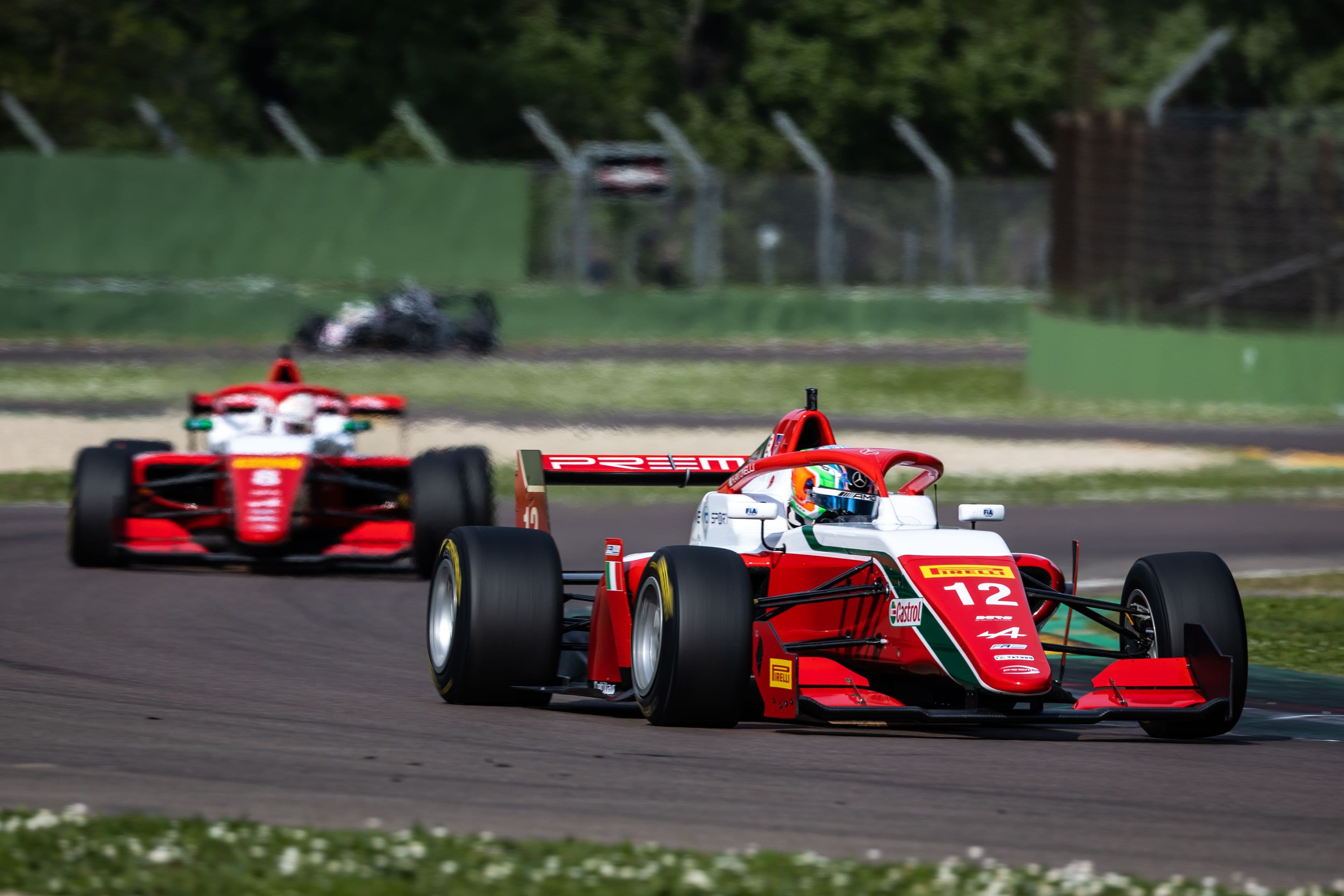
The challenge continued in Europe, where Antonelli returned to the track with PREMA to compete in the Formula Regional European Championship. Driving the Tatuus T-318 powered by Alpine, he faced an international field and rivals with considerably more experience in the category. After a promising start to the season, with strong results but no victory just yet, his breakthrough came at Spa-Francorchamps. From that point onwards, he stepped up another gear: he secured four more victories over the following five rounds, building the kind of consistency that would become one of his greatest strengths. Across 20 races, he recorded five wins, four pole positions, five fastest laps and 11 podiums, scoring 300 points and finishing outside the top six on just two occasions.


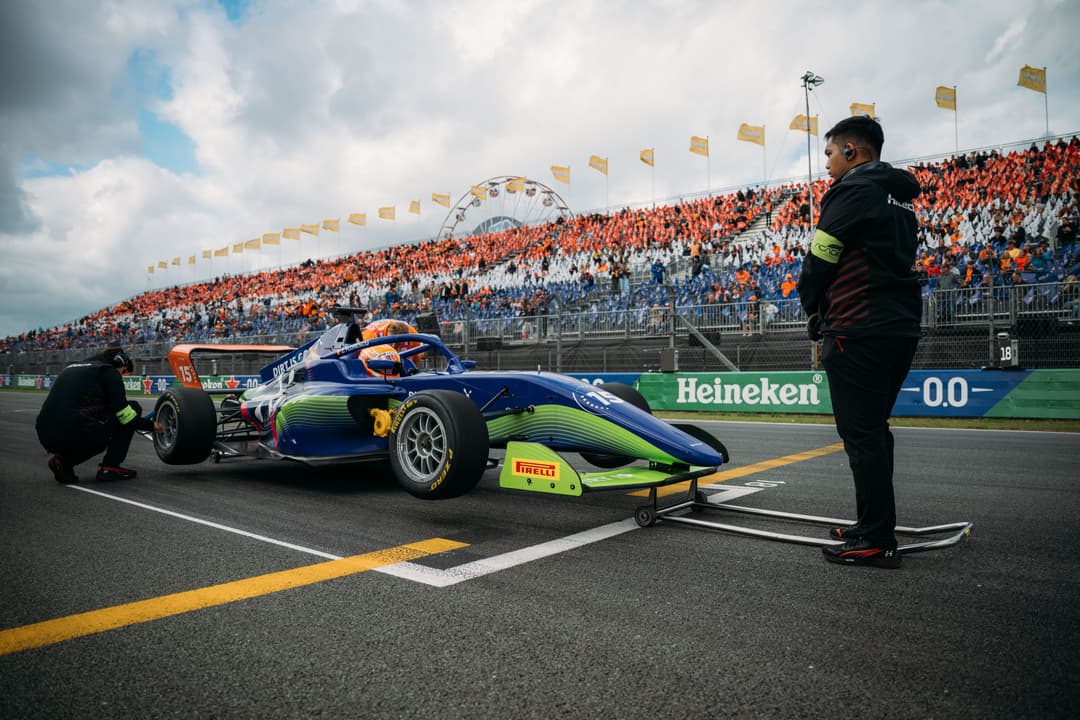
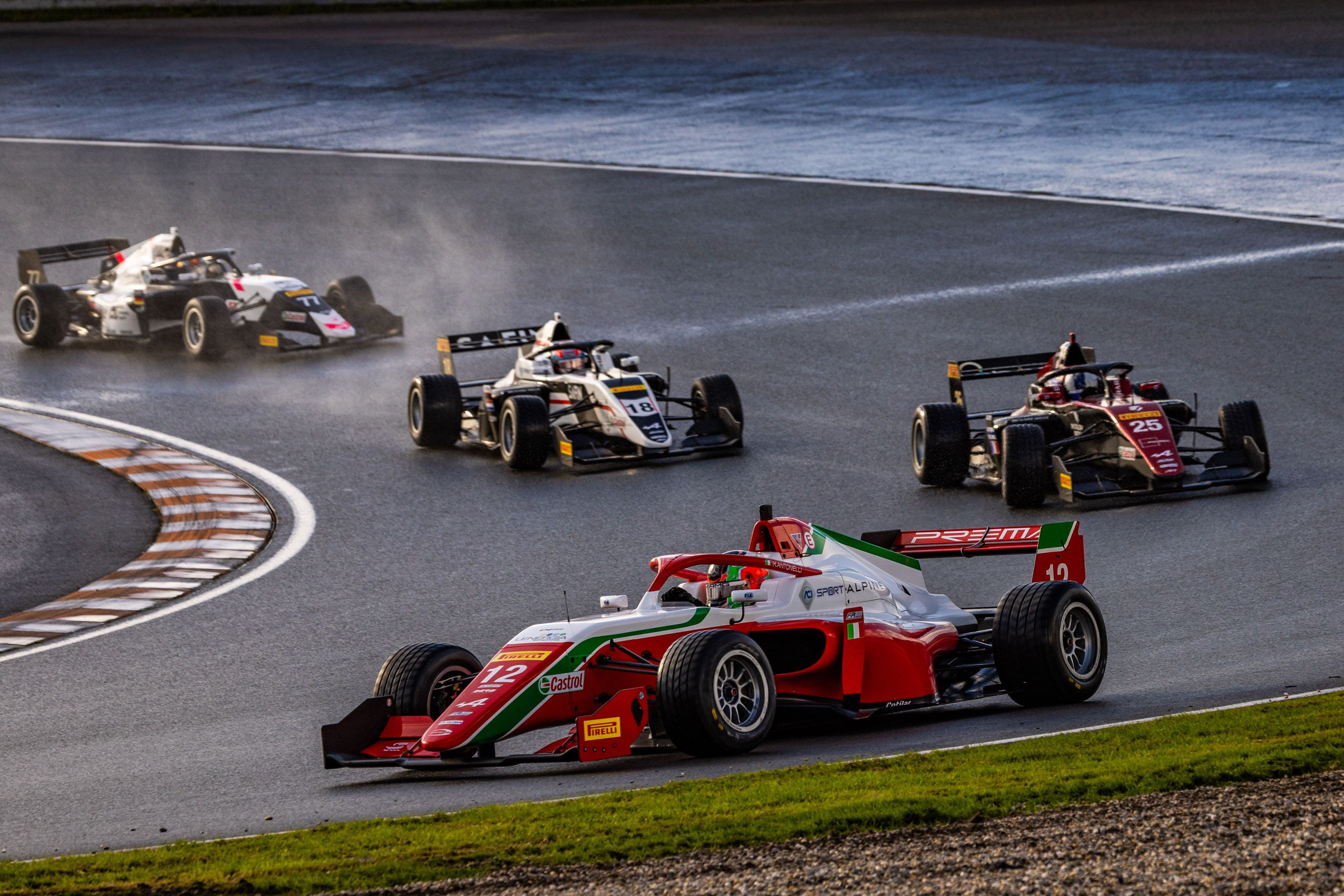
The decisive moment came at Zandvoort on 15 October 2023. In Race 2, on a wet track and starting from eighth on the grid, Antonelli produced an outstanding comeback to take victory and mathematically secure the European title with two races still to go. By the end of the season, he had claimed two Formula Regional titles in a single year, one in the Middle East and one in Europe. An achievement that confirmed the progress he had made since his karting days and continued through Formula 4 with Tatuus and ATM, once again bringing their cars and engines to the top of the competition.


That season marked the end of his journey through the Tatuus single-seater categories. In 2024, Antonelli made the direct move to Formula 2, skipping Formula 3, before stepping up to Formula 1 with Mercedes in 2025. A journey that began in Birel and KR karts and developed through Tatuus single-seaters and ATM engines, ultimately reaching the most coveted milestone of all: becoming a Formula 1 World Champion in 2026.
Share

Newsroom

Events, updates and latest news from the Tatuus world.
News
Weekend Preview: Three F4 Championships Take to the Track Across Three Continents

Weekend Preview: Three F4 Championships Take to the Track Across Three Continents

From the battles for the Rookie and Women’s Trophy titles in Italy to the final round of the Mexican season and another round of F4 Saudi Arabia, three Formula 4 championships will take centre stage this weekend.


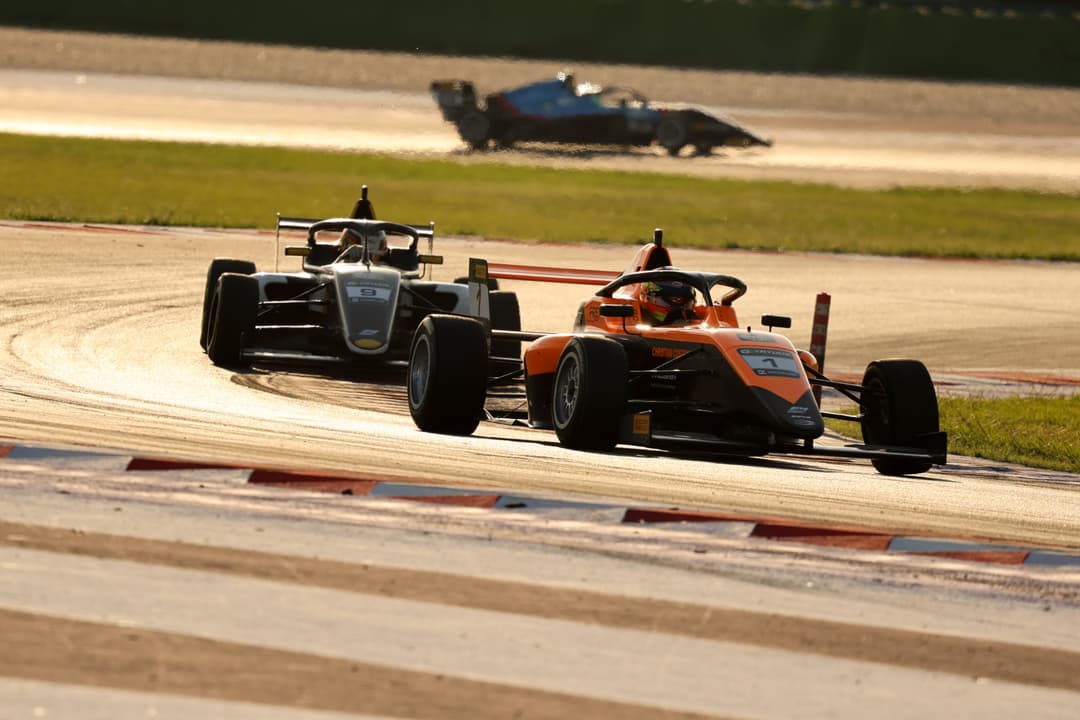
Tatuus cars return to the track this weekend across three different continents, with Formula 4 taking centre stage. The Italian F4 Championship will contest its season finale at Mugello, the F4 NACAM will bring its season to a close in Mexico City, and F4 Saudi Arabia will head to Bahrain for the third round of the 2026 season.


F4 ITALY

Mugello will host the final round of the 2026 Italian F4 Championship this weekend, bringing a season featuring young talents from around the world to a close. With the drivers’ title already secured by Luka Sammalisto and the teams’ championship awarded to US Racing , attention now turns to the remaining standings, which will be decided in the final races of the season. Almost 50 drivers, representing 13 teams and 25 nationalities, are set to take to the Tuscan circuit for one last international showdown.

The closest battle is for the Rookie title, with Alp Aksoy of Prema Racing leading the standings ahead of Kenzo Craigie of R-ace GP . The pair are separated by just 17 points, leaving the fight wide open heading into the final round. Aksoy, recently announced as a member of the Ferrari Driver Academy, will aim to defend the advantage he has built throughout the season, while Craigie, a member of the Mercedes junior programme, arrives at Mugello having already secured the E4 Championship title.

The Women’s Trophy also remains to be decided, with Emma Felbermayr of PHM Racing leading Californian driver Payton Westcott of R-ace GP . Her 56-point advantage puts the Austrian in a favourable position heading into the weekend, although the standings are not yet fully settled. Westcott, meanwhile, will look to make the most of the final races to close the gap and finish the season with the strongest result possible.

Weekend schedule
Friday 15:10 – Qualifying
Saturday 10:05 – Race 1 14:40 – Race 2
Sunday 08:40 – Race 3 12:15 – Final
All races will be broadcast live on ACI Sport TV and on the championship’s YouTube channel.


F4 NACAM

F4 NACAM is set to return to the Autódromo Hermanos Rodríguez for the Formula 1 Mexico City Grand Prix, taking place from 30 October to 1 November. A total of 14 cars will line up for the final round of the 2026 season, marking the Mexican championship’s eleventh appearance as a support series to Formula 1.

Competing during a Grand Prix weekend represents an important opportunity for the category’s young drivers, allowing them to race on an internationally renowned circuit in front of a large crowd and gain exposure on one of the biggest stages in motorsport.

The drivers’ title has already been secured by Alex Bobadilla of Alessandros Racing , who mathematically clinched the championship at the previous round in Puebla, held as part of the GT Challenge . The final event will therefore give the remaining competitors the opportunity to finish the season on a high at one of the most prominent events on the Mexican motorsport calendar.

The Mexico City weekend will bring the 2026 F4 NACAM season to a close, with 14 drivers ready to make the most of their final opportunities of the year on the Formula 1 stage.

Weekend schedule
Saturday 09:25 – Qualifying 16:45 – Race 1
Sunday 11:05 – Race 2


F4 SAUDI ARABIA

Following the races in Jeddah, F4 Saudi Arabia is set to return to the track in Bahrain for the third round of the 2026 season.

Marlon Bayer currently leads the standings with 83 points, but Archie Owen is just three points behind. The upcoming round will therefore be an important opportunity for both drivers: Bayer will aim to defend his lead, while Owen will look to overtake him and shift the championship balance in his favour.

With such a narrow gap between the two, the Bahrain round could prove significant in the title fight, with plenty still to play for as the season unfolds.
[...]
Stories
From Birel Karts to Tatuus Cars Powered by Autotecnica Motori: Zoe Florescu Reflects on Her Motorsport Journey

From Birel Karts to Tatuus Cars Powered by Autotecnica Motori: Zoe Florescu Reflects on Her Motorsport Journey

From Karting to Single-Seaters: Zoe Florescu’s Journey Through the Korus Ecosystem
Every driver’s journey begins somewhere and karting is where the foundations are built. It is where confidence takes shape, race craft develops and the ability to understand a vehicle becomes second nature. Moving into single-seaters brings a new set of challenges, requiring drivers to refine their technical feedback, analyse data in greater depth and adapt to a more complex racing environment.
Zoe Florescu has experienced this progression first-hand. Having spent most of her karting career with Birel, she has since made the step into single-seaters, competing in Spanish F4 and Italian F4 with Tatuus machinery powered by Autotecnica Motori engines, before making her F1 Academy debut as a Wild Card at Zandvoort.
Her journey reflects the breadth of expertise within Korus Group, whose companies span different stages of the motorsport pyramid, from Birel in karting to Tatuus chassis and Autotecnica Motori engines in single-seaters. While each step brings new demands, the knowledge, relationships and lessons built along the way can continue to shape a driver's development.
In this interview, Zoe looks back on the role karting played in building her confidence, the technical adjustments required to compete in Formula 4, her experience on an F1 weekend and the importance of seeing more women progress through the sport. Her story is also a reminder that development is not only about results, but about the people who help drivers believe in their potential and the work that turns that belief into progress.

You started your racing career in karting before making the step into single-seaters. What did karting teach you that you still carry with you today? I think the most important lesson karting taught me is how much self-confidence influences your driving and your results. When I first started competing internationally, I wasn't a well-known driver and I was racing with a small team. Being the only girl in a field full of boys, many of whom were backed by bigger teams with better equipment, could be quite intimidating.
I was also making the transition from national to international karting, so it took time to adapt. But as I became more comfortable competing in such an aggressive field, especially in KZ2, my results started to improve. I can see the same process happening now in Formula 4. With every race, I'm getting more comfortable, adapting to the conditions and learning how to put everything together to achieve the results I want.
That experience has taught me how important it is to believe in yourself. Although the transition from karting to single-seaters is very different, the mental side of racing remains similar. I often think back to my final races with Birel, particularly the KZ2 World Championship, and use that experience to maintain a positive mindset.

You grew up racing in the Birel karting environment, a name with a long and important history in karting. What did it mean to you to grow within the Birel family, and is there something from that experience that has stayed with you? Birel played a really important role in my development as a driver. I spent almost my entire karting career with the team. There was one year when I won FIA Girls on Track and received a free season with another brand, which was obviously an opportunity to take. Apart from that, all my years competing internationally in karting were with Birel.
Those years helped me build a strong foundation, both as a driver and in terms of the support system around me. In my final seasons in karting, I had Daniel Vasile as my coach, and he really helped me develop confidence in myself. I also had some amazing teammates who made a real difference.
I remember one of my best qualifying sessions, when my teammates helped me by working together on a strategy beforehand. Experiences like that show you how important it is to have the right people around you. When they believe in you, it becomes easier to believe in yourself, too. That support was particularly valuable when I made the step from OK Senior to KZ2.

Moving from karting to single-seaters is a significant step. What was the biggest adjustment for you when you first made the transition? The biggest adjustment was understanding just how demanding Formula 4 is. You need to pay much closer attention to every aspect of your driving and remain completely focused at all times.
In karting, once you've gained experience, driving becomes more instinctive. You arrive at the track with a good understanding of what you need to do in each corner. In Formula 4, however, there's much more to analyse. You need to study the data and onboard footage in detail, consider the conditions, tyre strategy and track position, and understand how factors such as wind and aerodynamics affect the car. You also have to work on your braking, acceleration and turning points.
In KZ2, for example, you can rely much more on instinct, throwing the kart into a corner and carrying speed through it. In a single-seater, you need a much more analytical approach. Racecraft is another challenge, particularly when it comes to running close to other cars and finding opportunities to overtake. Overall, learning to adapt to this new environment has been the most difficult part of the transition.

You have raced the same Tatuus car, the T-421, in different configurations across three different championships. How has that experience helped you develop as a driver and what aspects of the car have impressed you the most? I've driven the Tatuus T-421 in Spanish F4, Italian F4 and F1 Academy, and each championship has its own configuration. The cars have different braking systems, while F1 Academy also has different settings and a more restricted setup.
Adapting to these differences can be challenging, but I also see it as a valuable opportunity to experiment, broaden my skills and learn how to perform under different conditions. Each experience teaches you something new as a driver.
Of the three, I think the Spanish F4 car is my favourite. I've completed the most laps in it, so I'm probably the most familiar with that version, but it's definitely one of the cars I've enjoyed driving the most.

Having started your career in karting with Birel and now competing in single-seaters with Tatuus, powered by Autotecnica Motori engines, you have experienced different sides of the Korus Group ecosystem. What does it mean to you to grow within a motorsport community that can support a driver’s journey from karting to car racing? I'm still in contact with some people from karting, and I had considered doing a few races with Birel again this year, although my schedule has been quite full. Even if we're not in direct contact as much now, I feel that everything I learned during those years continues to help me in single-seaters.
In karting, we would spend a lot of time discussing the setup after each session, learning how to understand the kart and provide the best possible feedback. That experience has been really useful in Formula 4, where setup is just as important, if not more complex. Now that I'm working with a new team in Spanish F4, Technicar, I need to be as precise and detailed as possible when explaining what I feel on track. There are so many more variables you can adjust on a car compared with a kart, so good communication is essential.
Dani also taught me to look beyond my driving and pay attention to what I feel in the vehicle. That's something I always try to keep in mind. Understanding those sensations and being able to communicate them clearly is an important part of helping the team find the right setup and ultimately improving performance.

Racing as a wild card for the Formula 1 Academy at Zandvoort gave you the opportunity to experience a Formula 1 weekend from inside the paddock. What was the experience like for you? It was quite an up-and-down weekend, and the final result wasn't what I had hoped for. However, it was an incredibly valuable experience. During the weekend, I went from thinking I would be starting on the front row to having to completely reset my mindset and prepare for a race where I would need to fight my way forward.
The atmosphere was really special, from the fans to the whole environment around the paddock. Working with such a professional team was also a great learning opportunity and gave me a lot of confidence heading back to Spanish F4. Looking ahead, I see the weekend as valuable preparation for next year, as I hope to secure a full-time seat in F1 Academy.
The moment that stood out most was qualifying, because the conditions were extremely challenging. It was raining heavily at the start, with a completely wet track and a lot of spray. Towards the end of the session, we had to decide whether to switch from wet tyres to slicks, and I made that change quite late. In Formula 4, getting the tyres up to temperature is crucial, particularly in cold conditions when the track is transitioning from wet to dry.
Finishing qualifying in P7 and then achieving P2 in the reverse-grid race was a really positive result, especially because I had never driven that circuit in the wet or experienced those exact conditions in a Formula 4 car before. To go out in front of such a big crowd, take that risk and make it work was a very special moment for me.
I'm proud that my abilities were put to the test and that I was able to deliver when it mattered. Of course, not everything that happened afterwards was within my control, but overall, I feel I did a good job as a driver.

You drive a Tatuus car powered by an ATM engine, a pair that has helped nurture talents such as Kimi Antonelli. What does it mean to you to race with an engine that has played a role in the careers of so many drivers who have gone on to reach the highest levels of motorsport? I think having similar chassis and engines across different Formula 4 championships is a real advantage for drivers. It allows us to build on what we've learned and carry that experience from one championship to another, even when there are differences between the cars.
Knowing that so many Formula 1 drivers and talented racers have taken the same steps gives those of us coming from karting a lot of motivation. They all had to adapt to a new car, learn new techniques and work to achieve results, just as we are doing now. It reminds us that we're following a path that has already helped many drivers reach the highest levels of motorsport.
We're developing skills that are also essential in Formula 1, and seeing drivers who have progressed through these categories is a great source of inspiration. Kimi Antonelli, in particular, is an incredible example. Seeing him leading the championship in his second Formula 1 season is amazing.
I've also competed in the Italian championship, where he raced before me, and that's something I see as a small but meaningful connection. For drivers like me, these examples are a reminder that we're on the right track and that continuing to work hard can open up new opportunities.

More and more young girls are looking at motorsport as a possible path for themselves. How important is it for you to be part of this change and to show them that a career in racing is possible? It's really important to me because, when I was racing in karting, there were very few girls competing in the higher categories, and I was almost always the only one. That sometimes made it difficult to find the motivation to believe that I could make it as a woman in motorsport.
Today, with F1 Academy and more women competing in junior Formulas, I think younger girls have more examples to look up to. I'm really happy to be part of that change and to have the opportunity to be a role model.
My own journey shows that progress is possible, even when things don't go as planned at the beginning. I started in national karting, initially struggling to qualify for finals and then pre-finals. Eventually, I qualified for a World Championship in KZ2, and now I'm competing at a high level in Formula 4 and racing on Formula 1 weekends through F1 Academy.
I hope my experience can show other girls that, even if the goal seems out of reach at first, there is always room to improve and keep moving forward. Being able to inspire the next generation would mean a lot to me.

Finally, what would you tell a young girl who is considering taking her first steps into motorsport today? I'd tell her to believe in herself. If you believe in your abilities, show the people around you that you're committed and keep putting in the work, they will start believing in you, too. That can help you earn the support and opportunities you need to develop as a driver.
I've seen it in my own experience: when I had the right support and the tools I needed to improve, I was able to achieve my best results. Having people who believe in you can make a real difference.
Above all, I'd tell her to enjoy the sport. Motorsport can be brutal, but it's also full of adrenaline and incredible moments that make the difficult times worthwhile. It's important to keep your head up after a bad weekend, learn from it and come back ready to try again.
[...]
Stories
“Motorsport works like magic, capable of inspiring that uniquely Italian determination to keep believing in something even when the numbers don’t add up.”

“Motorsport works like magic, capable of inspiring that uniquely Italian determination to keep believing in something even when the numbers don’t add up.”

The words of CEO Giovanni Delfino in an interview with la Repubblica.

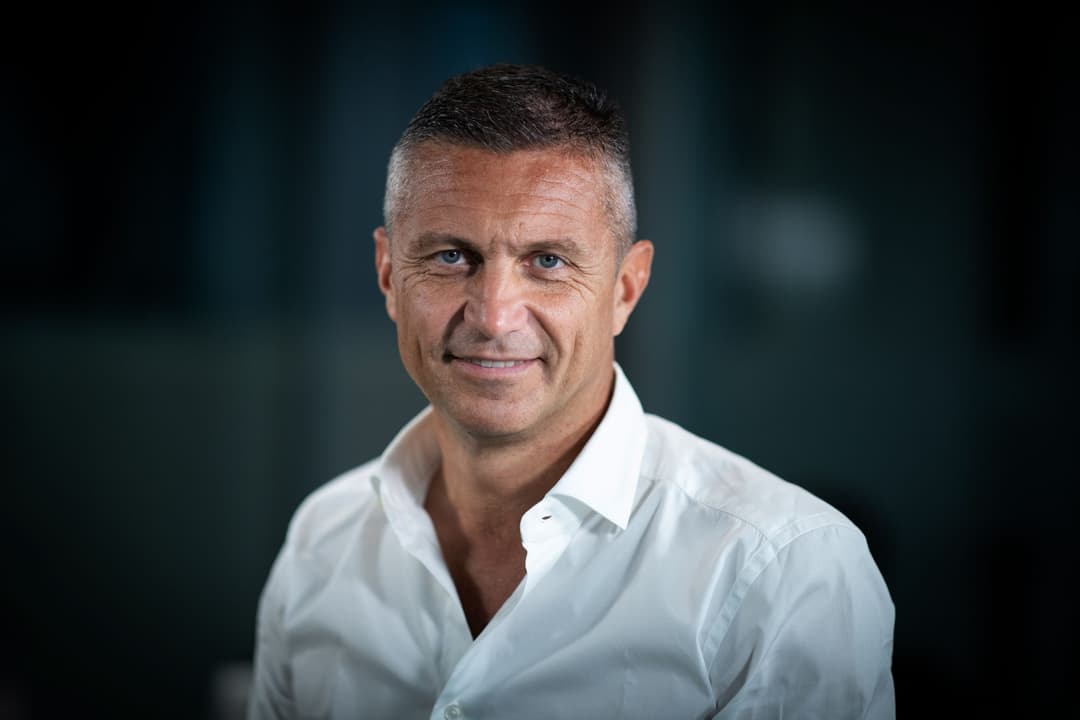
The CEO of Tatuus, ATM – Autotecnica Motori, and the Korus Group was featured in an interview published today in la Repubblica and written by Irene Saderini. During the conversation, he reflected on some of the most important and defining moments of his career, while also sharing his views on several aspects of the global motorsport industry.
The full interview is available on repubblica.it .

A Personal Journey A central theme of the interview is the CEO’s personal story, which began with his decision to pursue engineering studies and continued through a career marked by bold choices and decisive moments: “I don’t believe in luck; I believe in being able to seize it. When an opportunity comes your way, you have to recognize it. That said, it would be unfair to claim I wasn’t fortunate. I joined the company when I had virtually nothing. The founder allowed me to repay my debt over time, and I only finished paying the last installments two or three years ago.”
Delfino also spoke about his early years at Alfa Corse, where he developed his passion for experimentation and performance engineering: “At heart, I am a track engineer. I worked in the testing departments, where our job was to find that extra half horsepower from a finished product. My first experiences came in Alfa Romeo Touring Cars, with drivers such as Giovanardi, Tarquini and Larini competing against BMW and Mercedes. Sometimes those extra two horsepower were what won you the race.”

Formula 4 and Driver Development Among the key topics discussed was the production of Formula racing cars and engines, today one of the cornerstones of the Korus Group: “Everything starts with studying the regulations, which always leave room for interpretation—and success comes from finding the right one.” Speaking about Formula 4 engines, Delfino explained: “It all starts with a four-cylinder Fiat 500 Abarth unit. It must cost less than €16,500 due to the price cap and last 10,000 kilometres. My objective is to ensure that every engine performs the same.” The reward is seeing young talents progress step by step through the motorsport ladder and ultimately reach the highest levels of the sport: “It was particularly rewarding to see Andrea Kimi Antonelli begin his career in one of our cars.”

The Motorsport Industry The interview also included a broader reflection on the remarkable momentum motorsport is experiencing worldwide: “Motorsport sometimes works like a kind of magic, capable of overcoming marketing logic and keeping alive that uniquely Italian determination to believe in something even when the numbers don’t add up.”
Particularly representative of the Korus Group’s vision was Delfino’s perspective on internal combustion and electric powertrains: “For me, the smell of a winning engine is the smell of gasoline, hard work and sacrifice. A twelve-cylinder engine on track is like a violin—actually, an entire orchestra of violins. Racing is my world, and I find it difficult to see any of that emotion in batteries alone. Hybrid technology, however, is a different story. We are part of the FIA working group on the new regulations, and I find the hybrid approach very compelling.”
[...]
News
Tatuus Celebrates the 500th T-421, the World’s Most Widely Used Formula 4 Car

Tatuus Celebrates the 500th T-421, the World’s Most Widely Used Formula 4 Car

The Lainate-based manufacturer has celebrated the production and delivery of the 500th chassis of the single-seater on which Kimi Antonelli and Arvid Lindblad developed their careers.

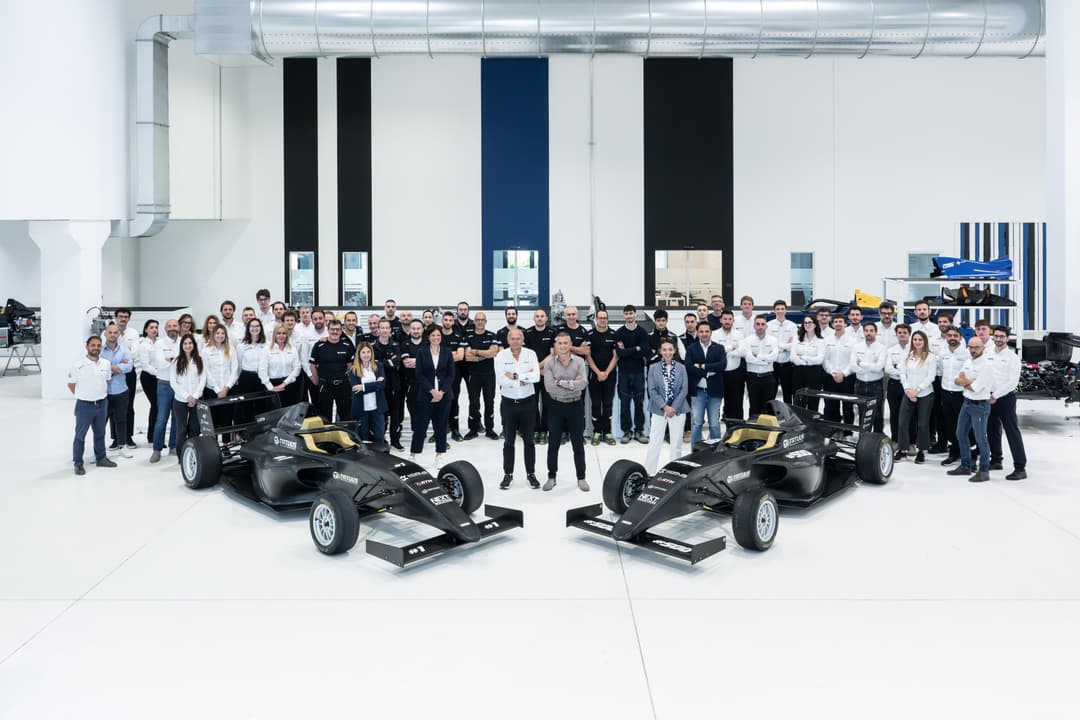
Born in 2021, the Tatuus T-421 reached its 500th unit produced and delivered in May 2026, once again confirming its status as one of the most manufactured and successful racing single-seaters worldwide. The milestone was celebrated by the Lainate-based brand together with all its employees and the sister companies of the Korus group, which contribute daily to the T-421 project: ATM–Autotecnica Motori, Breda Racing, and Next Solution Technologies.
Today, the T-421 is the most widely used Formula 4 car in the world, competing across 16 championships spanning Europe, the Americas, Asia, and Oceania. Behind its wheel, some of the most exciting talents in contemporary motorsport have developed, including Kimi Antonelli and Arvid Lindblad , who built the first steps of their single-seater careers in the second-generation Tatuus F4 before progressing all the way to the pinnacle of Formula 1.
“The 500th T-421 is not only a major milestone for Tatuus, but also an important achievement for the entire international motorsport ecosystem,” said Giovanni Delfino, CEO of Tatuus and the Korus Group. “With the introduction of Formula 4 in 2014, the FIA created a new pathway between karting and single-seaters, enabling drivers to arrive better prepared for higher categories. This model has established itself through years of significant growth in motorsport, during which many championships were launched and expanded, now reaching grids of nearly 50 cars per round with the second generation we celebrate today. These are figures that were difficult to imagine at the beginning of this journey, but which now define the everyday reality of many of the companies within the Korus Group.”
“Throughout Tatuus’ history, many of our models have achieved widespread adoption across global championships and have demonstrated unparalleled driver development capabilities,” added Gianfranco De Bellis, President of Tatuus and the Korus group. “The T-421 is writing an important chapter in the history of our brand and, together with the first-generation car, is now approaching 800 units produced. These volumes allow us to aim toward the milestone of 1,000 F4 single-seaters, a figure previously approached by the various Formula Renault models that marked a turning point in our history and in the development path of many drivers.”
As the second generation of Formula 4 single-seaters, the T-421 succeeded the T-014, which from 2014—the year Formula 4 was introduced—through 2021 was produced in just under 300 units. It represented the ideal platform for drivers transitioning from karting to single-seaters, and helped develop talents such as Lando Norris, Oscar Piastri, Max Verstappen, Isack Hadjar, Liam Lawson, Lance Stroll, Oliver Bearman, Gabriel Bortoleto, and Franco Colapinto.
The T-421 is just one of many examples of the cooperation that makes the Korus group one of the leading global ecosystems in motorsport engineering. The companies within the Group involved in the celebration have contributed to the project from day one, within a consolidated model of synergies that each year gives rise to new cars, powertrains, and solutions for motorsport.
Specifically, ATM–Autotecnica Motori developed and supplies the Abarth-derived inline four-cylinder engine that powers the car, while Breda Racing is responsible for a large portion of the components—such as the halo and suspension arms—as well as instrumentation required for managing the cars both on track and at HQ. Next Solution Technologies provides a significant part of the car’s electronic and electromechanical systems, in addition to supplying steering wheels and rain lights.
However, the milestone of 500 cars does not represent a finishing point for Tatuus. Production of the current model will continue through 2028 , when FIA regulations foresee the introduction of the third-generation car , on which the brands of the Korus Group are already actively working.

[...]