From Birel Karts to Tatuus Cars Powered by Autotecnica Motori: Zoe Florescu Reflects on Her Motorsport Journey
From Karting to Single-Seaters: Zoe Florescu’s Journey Through the Korus Ecosystem
Every driver’s journey begins somewhere and karting is where the foundations are built. It is where confidence takes shape, race craft develops and the ability to understand a vehicle becomes second nature. Moving into single-seaters brings a new set of challenges, requiring drivers to refine their technical feedback, analyse data in greater depth and adapt to a more complex racing environment.
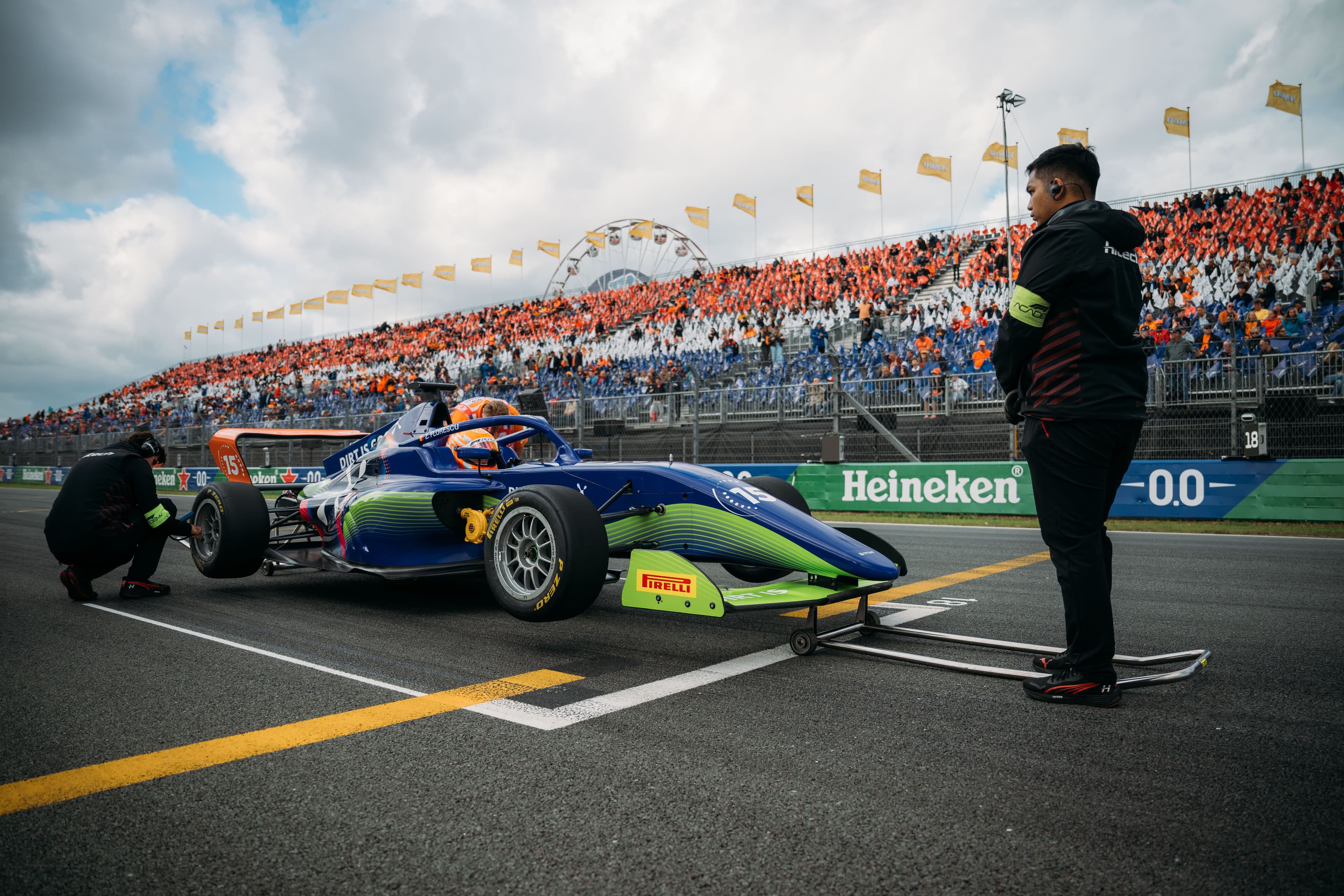
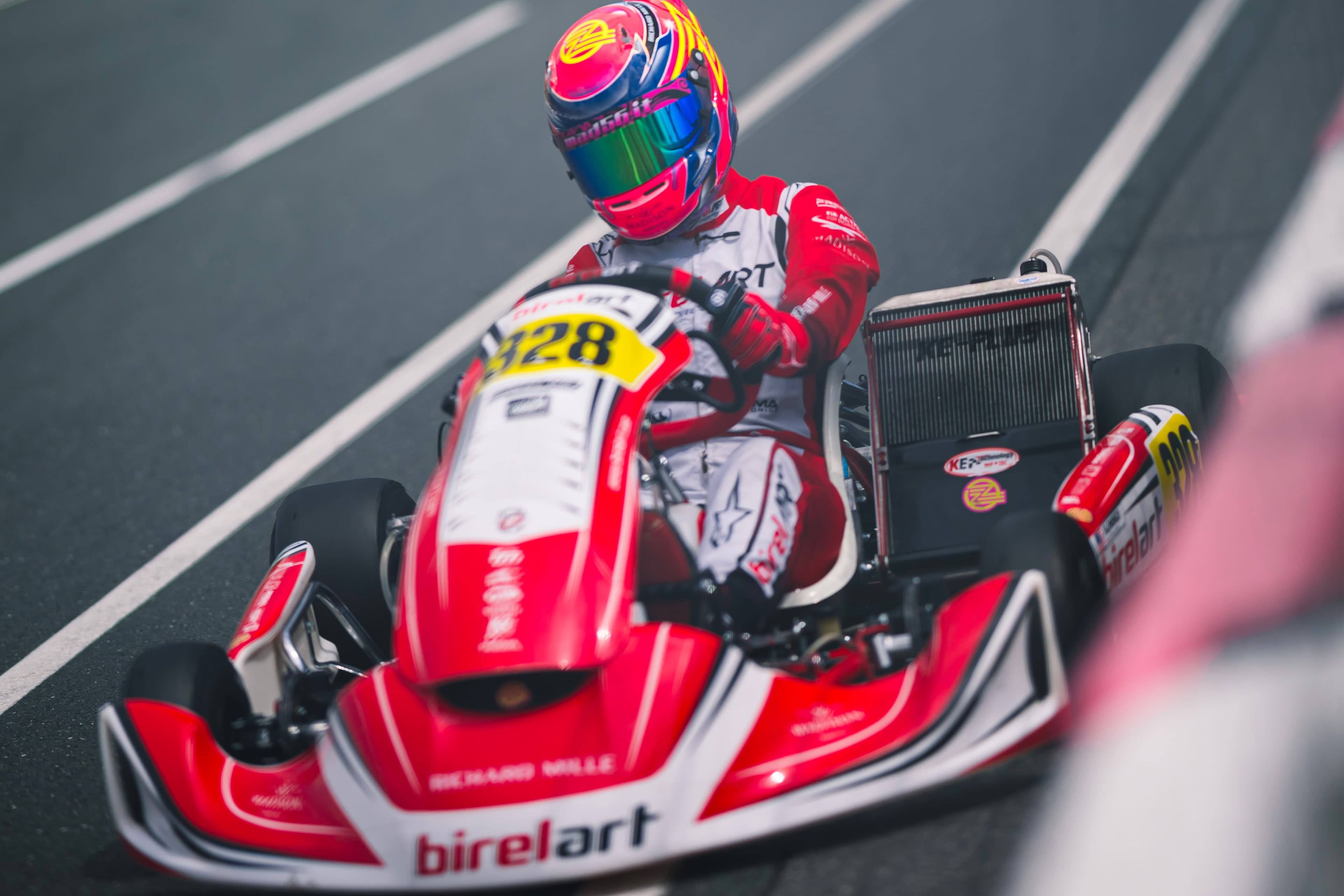
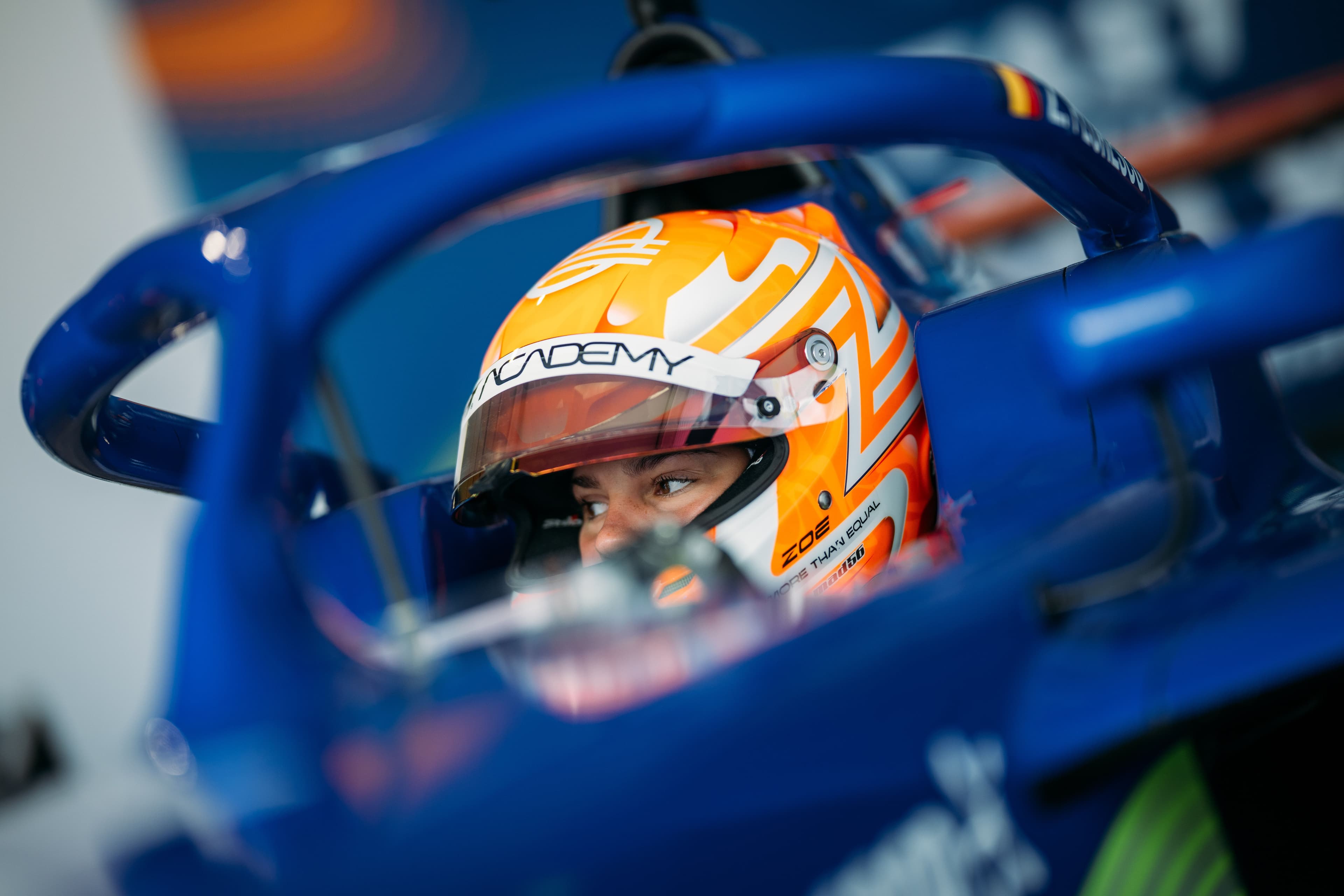
Zoe Florescu has experienced this progression first-hand. Having spent most of her karting career with Birel, she has since made the step into single-seaters, competing in Spanish F4 and Italian F4 with Tatuus machinery powered by Autotecnica Motori engines, before making her F1 Academy debut as a Wild Card at Zandvoort.
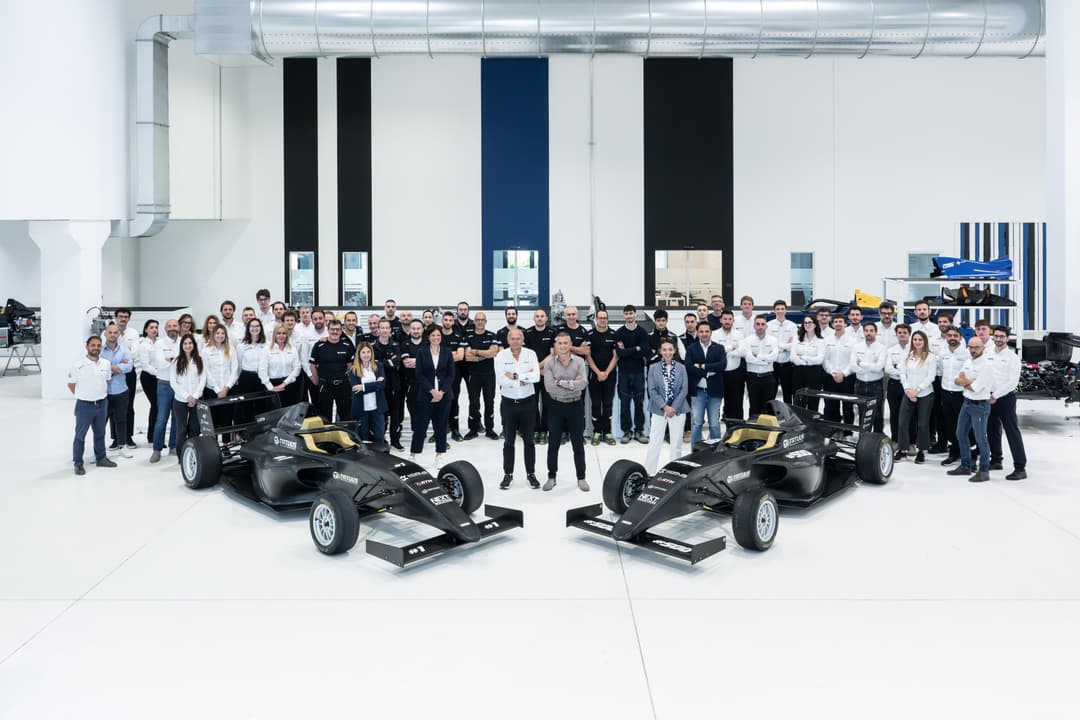
Her journey reflects the breadth of expertise within Korus Group, whose companies span different stages of the motorsport pyramid, from Birel in karting to Tatuus chassis and Autotecnica Motori engines in single-seaters. While each step brings new demands, the knowledge, relationships and lessons built along the way can continue to shape a driver's development.
In this interview, Zoe looks back on the role karting played in building her confidence, the technical adjustments required to compete in Formula 4, her experience on an F1 weekend and the importance of seeing more women progress through the sport. Her story is also a reminder that development is not only about results, but about the people who help drivers believe in their potential and the work that turns that belief into progress.
You started your racing career in karting before making the step into single-seaters. What did karting teach you that you still carry with you today?
I think the most important lesson karting taught me is how much self-confidence influences your driving and your results. When I first started competing internationally, I wasn't a well-known driver and I was racing with a small team. Being the only girl in a field full of boys, many of whom were backed by bigger teams with better equipment, could be quite intimidating.
I was also making the transition from national to international karting, so it took time to adapt. But as I became more comfortable competing in such an aggressive field, especially in KZ2, my results started to improve. I can see the same process happening now in Formula 4. With every race, I'm getting more comfortable, adapting to the conditions and learning how to put everything together to achieve the results I want.
That experience has taught me how important it is to believe in yourself. Although the transition from karting to single-seaters is very different, the mental side of racing remains similar. I often think back to my final races with Birel, particularly the KZ2 World Championship, and use that experience to maintain a positive mindset.
You grew up racing in the Birel karting environment, a name with a long and important history in karting. What did it mean to you to grow within the Birel family, and is there something from that experience that has stayed with you?
Birel played a really important role in my development as a driver. I spent almost my entire karting career with the team. There was one year when I won FIA Girls on Track and received a free season with another brand, which was obviously an opportunity to take. Apart from that, all my years competing internationally in karting were with Birel.
Those years helped me build a strong foundation, both as a driver and in terms of the support system around me. In my final seasons in karting, I had Daniel Vasile as my coach, and he really helped me develop confidence in myself. I also had some amazing teammates who made a real difference.
I remember one of my best qualifying sessions, when my teammates helped me by working together on a strategy beforehand. Experiences like that show you how important it is to have the right people around you. When they believe in you, it becomes easier to believe in yourself, too. That support was particularly valuable when I made the step from OK Senior to KZ2.
Moving from karting to single-seaters is a significant step. What was the biggest adjustment for you when you first made the transition?
The biggest adjustment was understanding just how demanding Formula 4 is. You need to pay much closer attention to every aspect of your driving and remain completely focused at all times.
In karting, once you've gained experience, driving becomes more instinctive. You arrive at the track with a good understanding of what you need to do in each corner. In Formula 4, however, there's much more to analyse. You need to study the data and onboard footage in detail, consider the conditions, tyre strategy and track position, and understand how factors such as wind and aerodynamics affect the car. You also have to work on your braking, acceleration and turning points.
In KZ2, for example, you can rely much more on instinct, throwing the kart into a corner and carrying speed through it. In a single-seater, you need a much more analytical approach. Racecraft is another challenge, particularly when it comes to running close to other cars and finding opportunities to overtake. Overall, learning to adapt to this new environment has been the most difficult part of the transition.
You have raced the same Tatuus car, the T-421, in different configurations across three different championships. How has that experience helped you develop as a driver and what aspects of the car have impressed you the most?
I've driven the Tatuus T-421 in Spanish F4, Italian F4 and F1 Academy, and each championship has its own configuration. The cars have different braking systems, while F1 Academy also has different settings and a more restricted setup.
Adapting to these differences can be challenging, but I also see it as a valuable opportunity to experiment, broaden my skills and learn how to perform under different conditions. Each experience teaches you something new as a driver.
Of the three, I think the Spanish F4 car is my favourite. I've completed the most laps in it, so I'm probably the most familiar with that version, but it's definitely one of the cars I've enjoyed driving the most.
Having started your career in karting with Birel and now competing in single-seaters with Tatuus, powered by Autotecnica Motori engines, you have experienced different sides of the Korus Group ecosystem. What does it mean to you to grow within a motorsport community that can support a driver’s journey from karting to car racing?
I'm still in contact with some people from karting, and I had considered doing a few races with Birel again this year, although my schedule has been quite full. Even if we're not in direct contact as much now, I feel that everything I learned during those years continues to help me in single-seaters.
In karting, we would spend a lot of time discussing the setup after each session, learning how to understand the kart and provide the best possible feedback. That experience has been really useful in Formula 4, where setup is just as important, if not more complex. Now that I'm working with a new team in Spanish F4, Technicar, I need to be as precise and detailed as possible when explaining what I feel on track. There are so many more variables you can adjust on a car compared with a kart, so good communication is essential.
Dani also taught me to look beyond my driving and pay attention to what I feel in the vehicle. That's something I always try to keep in mind. Understanding those sensations and being able to communicate them clearly is an important part of helping the team find the right setup and ultimately improving performance.
Racing as a wild card for the Formula 1 Academy at Zandvoort gave you the opportunity to experience a Formula 1 weekend from inside the paddock. What was the experience like for you?
It was quite an up-and-down weekend, and the final result wasn't what I had hoped for. However, it was an incredibly valuable experience. During the weekend, I went from thinking I would be starting on the front row to having to completely reset my mindset and prepare for a race where I would need to fight my way forward.
The atmosphere was really special, from the fans to the whole environment around the paddock. Working with such a professional team was also a great learning opportunity and gave me a lot of confidence heading back to Spanish F4. Looking ahead, I see the weekend as valuable preparation for next year, as I hope to secure a full-time seat in F1 Academy.
The moment that stood out most was qualifying, because the conditions were extremely challenging. It was raining heavily at the start, with a completely wet track and a lot of spray. Towards the end of the session, we had to decide whether to switch from wet tyres to slicks, and I made that change quite late. In Formula 4, getting the tyres up to temperature is crucial, particularly in cold conditions when the track is transitioning from wet to dry.
Finishing qualifying in P7 and then achieving P2 in the reverse-grid race was a really positive result, especially because I had never driven that circuit in the wet or experienced those exact conditions in a Formula 4 car before. To go out in front of such a big crowd, take that risk and make it work was a very special moment for me.
I'm proud that my abilities were put to the test and that I was able to deliver when it mattered. Of course, not everything that happened afterwards was within my control, but overall, I feel I did a good job as a driver.
You drive a Tatuus car powered by an ATM engine, a pair that has helped nurture talents such as Kimi Antonelli. What does it mean to you to race with an engine that has played a role in the careers of so many drivers who have gone on to reach the highest levels of motorsport?
I think having similar chassis and engines across different Formula 4 championships is a real advantage for drivers. It allows us to build on what we've learned and carry that experience from one championship to another, even when there are differences between the cars.
Knowing that so many Formula 1 drivers and talented racers have taken the same steps gives those of us coming from karting a lot of motivation. They all had to adapt to a new car, learn new techniques and work to achieve results, just as we are doing now. It reminds us that we're following a path that has already helped many drivers reach the highest levels of motorsport.
We're developing skills that are also essential in Formula 1, and seeing drivers who have progressed through these categories is a great source of inspiration. Kimi Antonelli, in particular, is an incredible example. Seeing him leading the championship in his second Formula 1 season is amazing.
I've also competed in the Italian championship, where he raced before me, and that's something I see as a small but meaningful connection. For drivers like me, these examples are a reminder that we're on the right track and that continuing to work hard can open up new opportunities.
More and more young girls are looking at motorsport as a possible path for themselves. How important is it for you to be part of this change and to show them that a career in racing is possible?
It's really important to me because, when I was racing in karting, there were very few girls competing in the higher categories, and I was almost always the only one. That sometimes made it difficult to find the motivation to believe that I could make it as a woman in motorsport.
Today, with F1 Academy and more women competing in junior Formulas, I think younger girls have more examples to look up to. I'm really happy to be part of that change and to have the opportunity to be a role model.
My own journey shows that progress is possible, even when things don't go as planned at the beginning. I started in national karting, initially struggling to qualify for finals and then pre-finals. Eventually, I qualified for a World Championship in KZ2, and now I'm competing at a high level in Formula 4 and racing on Formula 1 weekends through F1 Academy.
I hope my experience can show other girls that, even if the goal seems out of reach at first, there is always room to improve and keep moving forward. Being able to inspire the next generation would mean a lot to me.
Finally, what would you tell a young girl who is considering taking her first steps into motorsport today?
I'd tell her to believe in herself. If you believe in your abilities, show the people around you that you're committed and keep putting in the work, they will start believing in you, too. That can help you earn the support and opportunities you need to develop as a driver.
I've seen it in my own experience: when I had the right support and the tools I needed to improve, I was able to achieve my best results. Having people who believe in you can make a real difference.
Above all, I'd tell her to enjoy the sport. Motorsport can be brutal, but it's also full of adrenaline and incredible moments that make the difficult times worthwhile. It's important to keep your head up after a bad weekend, learn from it and come back ready to try again.
Share
Newsroom
Events, updates and latest news from the Tatuus world.